
What is topical authority? How to build it on WordPress
By Anis Harbaoui, SEO specialist
Topical authority is the depth and breadth of coverage a site has on one subject, to the point that search engines and readers treat it as a reliable source on it. It is an SEO concept, not a Google metric, and there is no score to look up. But the idea matches what Google says it wants to reward, which is helpful and reliable content, and it gives you a practical way to plan what to publish.
- Topical authority is an SEO idea, not an official Google score.
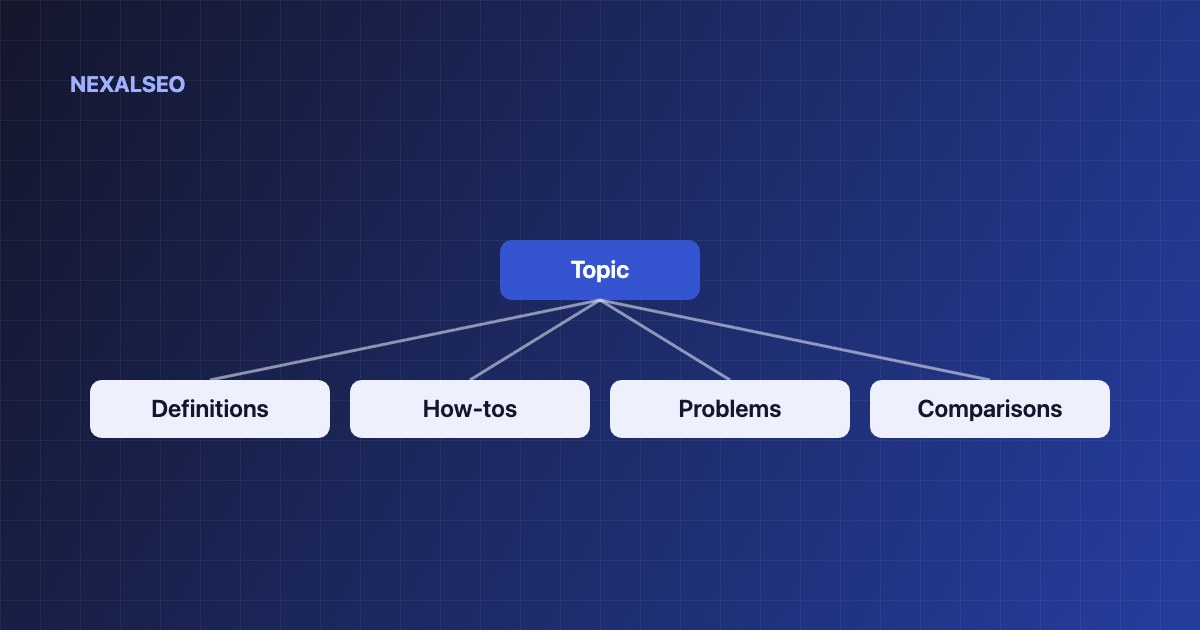
- Cover a topic completely, with definitions, how-tos, problems and comparisons, instead of chasing single keywords.
- Internal links connect the pieces so the site reads as one body of knowledge.
- Quality comes first. Breadth without accuracy does not work.
What is topical authority?
A site has topical authority when it answers most of the questions around a subject, accurately, across many connected pages. A site with one strong page on a subject is a weaker source than a site that covers the whole subject well.
The term was popularised in SEO by Koray Tuğberk Gübür, whose topical map method is widely used, and it builds on older ideas about semantic search. Google’s own documentation does not use the phrase. It talks about helpful, reliable content created for people, which is the same goal from another angle.
Why is topical authority important for WordPress sites?
A small site cannot out-link a large publisher, but it can out-cover it on a narrow subject. When your pages support each other, each one is easier for search engines to place and easier for readers to follow. Complete coverage also gives AI assistants more material to cite for the sub-questions people ask.
How do you build topical authority?
- Choose one central topic you can cover better than anyone else. Narrow beats broad.
- List every question around it: definitions, how-tos, troubleshooting, comparisons and costs. That list is your a map of every page you need.
- Publish the pages that earn money first, then the supporting guides.
- Link each page to its parent topic and to two siblings. Our internal linking guide shows how.
- Keep pages accurate and current. Merge or remove thin ones.
How do you measure topical authority?
There is no official score, so use proxies. Track how much of your topic map is published, how many different queries across the topic earn impressions in Search Console, how many pages have no internal links, and how quickly new pages get indexed. NexalSEO reports cluster health and topical completeness for posts in a category, which helps you spot gaps.
What mistakes hurt topical authority?
- Publishing many thin articles just to fill a map.
- Covering subjects far from your real expertise.
- Writing two pages for the same question, so they compete with each other.
- Leaving pages without internal links. See how to find and fix orphaned pages.
- Never updating old pages.
Frequently asked questions
Is topical authority a Google ranking factor?
Google has not described a topical authority score or ranking factor. The idea is a way to plan complete, helpful content, which Google does say it rewards.
How many articles do I need?
There is no fixed number. Cover the questions your audience asks about the topic. A tight niche can often be covered in a few dozen pages.
How long does it take to build topical authority?
It depends on competition and how fast you publish quality pages. Expect months rather than weeks.
Can a small site build topical authority?
Yes, by staying narrow. A small site that covers one subject thoroughly can compete well against a large general site on that subject.
Related guides
Building the map
Plan every page before you write it.
Meaning, entities and relations
The ideas behind topical authority.
Linking the pieces together
How links turn pages into a cluster.
NexalSEO reports orphan pages and cluster health so you can see which parts of a topic are missing links.
See internal link suggestions